
Learn CPR
Hands-Only CPR in 5 Steps
 By Gene Jolley, AHA Heartsaver® Instructor · October 2026
Real emergency right now? Call 911 first. The dispatcher will coach you through CPR.
When an adult's heart suddenly stops, the minutes before the ambulance arrives decide what happens next. You don't need to be a nurse or a firefighter to help. You need two hands and a few simple steps.
Hands-Only CPR means chest compressions with no mouth-to-mouth breaths. The American Heart Association says it can be just as effective as regular CPR for a teen or adult who collapses in front of you. Here's how to do it.
The 5 steps
Check the person
First, make sure the area is safe for you. Watch for traffic, water and live wires. Then tap the person's shoulder and shout, "Are you okay?"
Look at the chest for up to 10 seconds. If they don't respond and aren't breathing, or are only gasping, it's time to act.
Gasping is not breathing. Slow, noisy gasps are common right after the heart stops. Treat it the same as no breathing and start CPR.
Call 911 and get an AED
- Call 911 and put your phone on speaker so your hands are free.
- Point at someone and say, "You, get the AED." A specific person and a specific job gets faster results than shouting to a crowd.
- Alone? Call 911 first, then start compressions.
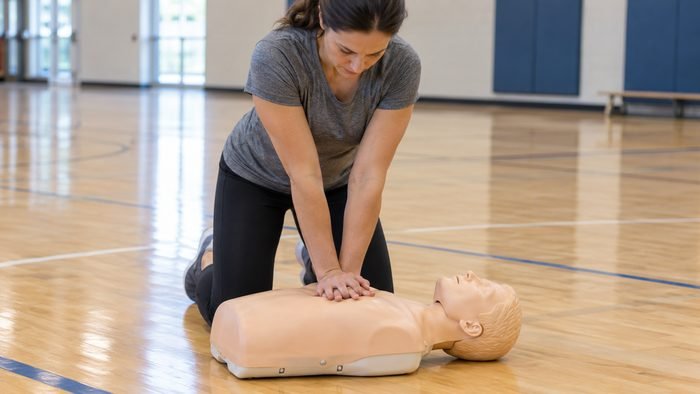
Put your hands in place
- Lay the person on their back on a firm, flat surface. The floor is best.
- Kneel beside their chest.
- Put the heel of one hand on the center of the chest, on the lower half of the breastbone.
- Put your other hand on top and lace your fingers.
- Lock your elbows, and get your shoulders right over your hands.
Push hard and fast
- Hard: straight down, at least 2 inches deep.
- Fast: 100 to 120 pushes a minute, a little under 2 per second.
- Let it come back: let the chest rise all the way up between pushes. Don't lean on it.
Use a song. "Stayin' Alive" by the Bee Gees is right in the zone. Push on every beat. Use your body weight, not your arms. Your arms will tire out in a minute. Your back and shoulders won't.
Keep going, and use the AED
- Don't stop until paramedics take over, an AED is ready, or the person starts to move or breathe normally.
- Keep any pause to under 10 seconds.
- If someone else is there, switch every 2 minutes. Compressions get weaker as you tire, often before you notice.
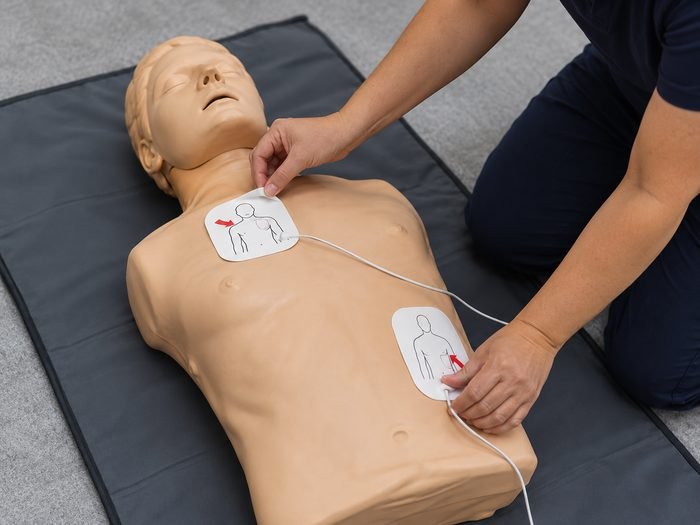
- When the AED arrives, turn it on and follow its voice (full AED guide). It tells you where the pads go and when to stand clear. Start compressions again as soon as it tells you to.
Practice the speed right now. Our free CPR Metronome keeps a steady beat between 100 and 120 a minute, with songs you'll remember under stress.
Open the CPR MetronomeWhen to use Hands-Only CPR, and when breaths matter
Hands-Only CPR is for
- Teens and adults who suddenly collapse in front of you
- Anyone not trained in breaths, or not comfortable giving them
CPR with breaths is recommended for
- Infants and children
- Drowning and drug overdose
- Someone who collapsed from a breathing problem
- Someone found already unresponsive, not seen collapsing
Want a CPR mask in your car or on your keys? See the gear I recommend.
Not trained in breaths? Don't let that stop you. The American Heart Association is clear that any attempt at CPR is better than no attempt.
"What if I hurt them?"
It's the most common worry I hear in class. Here's the honest answer: a person in cardiac arrest is already clinically dead. You can't make that worse. Ribs sometimes crack during good compressions. Ribs heal. And Vermont and New Hampshire both have Good Samaritan laws that protect people who help in good faith in an emergency.
Why I teach this
In 2023, I went in expecting a single stent and came out with six coronary bypasses. I was lucky. The warning signs showed up early enough for doctors to fix the problem. Not everyone gets that chance. When a heart stops without warning, the person standing closest is the one who makes the difference. I'd like that person to be ready. Read my story.
Reading is a start. Practice is what sticks.
In a hands-on class, you'll feel how hard and fast to push on a real manikin, and use an AED trainer before you ever need one.
See CPR classesLearn more from trusted sources
- Hands-Only CPR: the American Heart Association's official page, with short how-to videos
- Hands-Only CPR FAQ (PDF): the American Heart Association's answers on when to use Hands-Only CPR and when breaths matter
This guide is for general education and follows American Heart Association guidance for adults. It does not replace a hands-on CPR course or certification. In an emergency, always call 911 and follow the dispatcher's instructions. Twin State Safety is an independent training business; Heartsaver is a registered trademark of the American Heart Association.